No, Instagram Won't Tell You Who Viewed Your Profile — Here's the Real Story
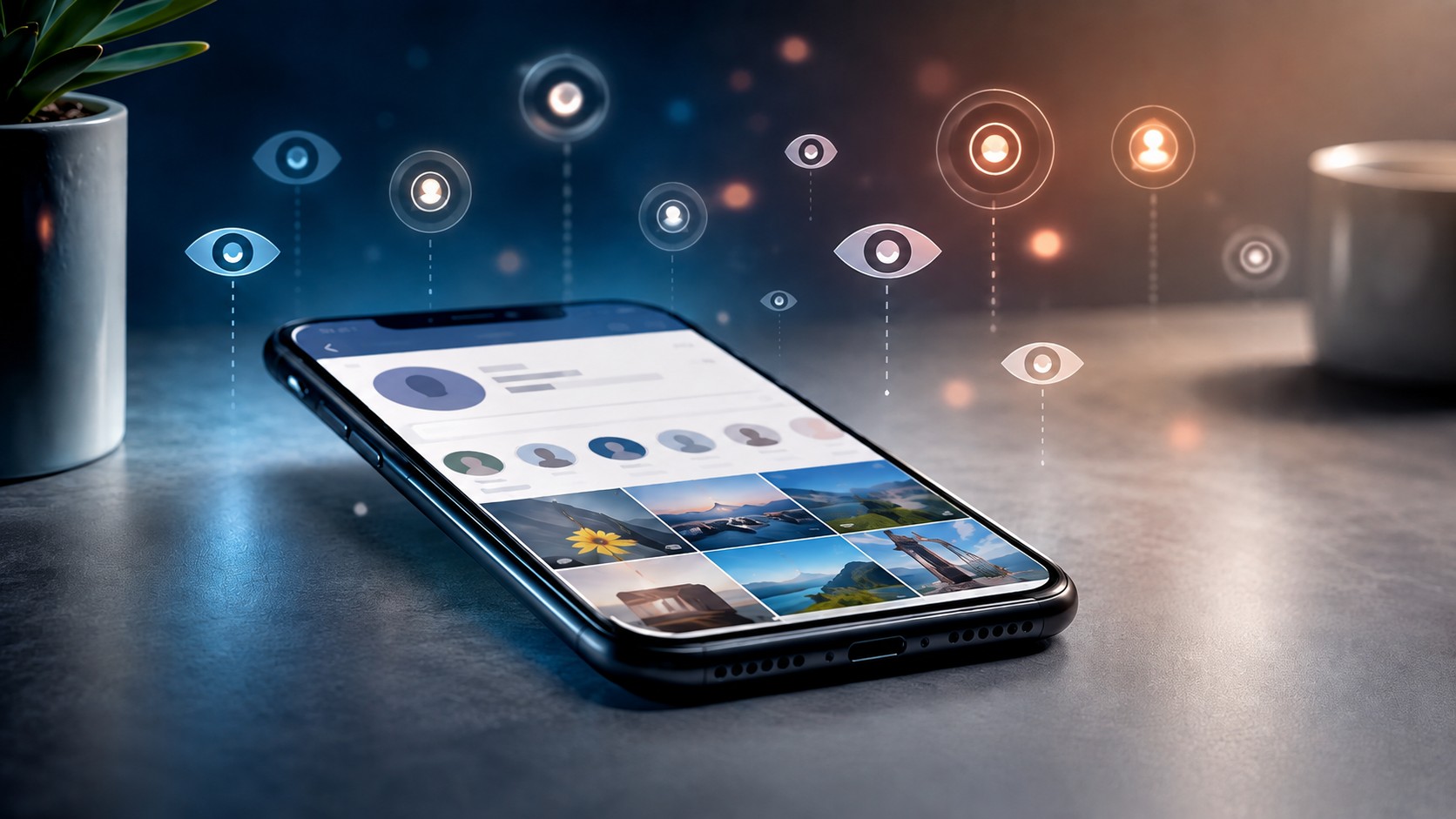
TL;DR: You cannot see who viewed your Instagram profile. Not on a personal account, not on a creator or business one, and not through any app, hack, or “hidden menu.” Instagram has never tracked passive profile visits and stores no visitor list for anyone to pull — including you. Every “who viewed my profile” app is either inventing names, recycling your followers, or phishing your login, so don’t hand any of them your password. What Instagram does show is narrower and honest: who watched your Story, who’s tuned into your Live, and who liked, commented, or messaged. Business and creator accounts also get a plain visit count in Insights — a number, never names. The twist worth knowing? Your own lurking is invisible too, with one glaring exception: view someone’s Story and your name lands in their list. That’s the only spot where browsing leaves a mark, and it’s exactly the thing an anonymous viewer exists to solve.
Somebody’s been on your page. You can feel it. That itch — who keeps checking me? — is probably the oldest fantasy on social media, older than Instagram itself. Facebook never scratched it. Instagram hasn’t either. And yet the app stores stay stuffed with tools swearing they’ve cracked the code.
They haven’t. There’s nothing to crack.
The blunt answer, and why Instagram built it that way
No feature exists that reveals who visited your profile. It isn’t buried in settings. It isn’t a creator perk. It isn’t something a business account unlocks. Across every account type, the answer lands the same: you get nothing, because Instagram records nothing about passive visits.
That’s a design choice, not an oversight. Picture how you actually use the app. You drift through an ex’s grid, peek at a former boss, scroll a brand page you’d never admit to liking. Now imagine each of those left a calling card. You’d tighten up overnight — everyone would — and that easy, no-stakes lurking is a huge part of what keeps people scrolling. Meta knows it. Killing the anonymity of browsing would quietly kick the legs out from under the whole thing.
So the silence is deliberate. It also cuts both ways, which we’ll get to, because that’s the part most articles skip.
Worth remembering, too, that this craving predates Instagram by a mile. Back in the early social-media days people swapped rumours about secret codes that supposedly exposed their profile visitors, and every one of those turned out to be smoke. The platforms change; the wishful thinking doesn’t. If a genuine “who’s been looking” feature were ever going to appear, roughly two decades of demand would have dragged it into existence by now. It hasn’t, and that tells you something.
About those “who viewed my profile” apps
Search either app store and you’ll trip over dozens of them. Names in the vein of “Who Viewed My Profile,” “InStalker,” “IG Analyzer,” “Follow Insight.” Slick icons. Five-star ratings that smell bought. Every last one is selling a feature that does not, and cannot, exist.
Here’s the con, mechanically:
- The login grab. The app asks you to sign in with your Instagram username and password, or an OAuth prompt dressed up to look official. That’s the whole game right there.
- The fake reveal. It spits out a “viewer list” stitched from random followers, friends of followers, or whoever recently liked a post. Plausible faces, zero real signal.
- The paywall. The “full results” hide behind a subscription, an in-app purchase, or a survey maze that pays the developer per click.
- The fallout. Best case, you wasted a fiver on invented data. Worst case, your credentials get sold, your account starts firing spam DMs, and Instagram slaps it with a ban for the suspicious login.
Instagram’s own third-party rules flat-out prohibit tools claiming access to private data like this. A legitimate Instagram tool never needs your password, full stop — it works off public usernames alone. So the rule of thumb is embarrassingly simple: the moment something asks you to log in to reveal data Instagram itself doesn’t publish, close the tab. It’s fake at best and a credential trap at worst.
And the damage isn’t always obvious right away. A phished login can sit dormant for weeks before it’s used, then suddenly your contacts are getting spammy “check this out” messages from you, your recovery email gets swapped, and you’re locked out of your own account trying to prove it’s yours. Untangling that mess costs hours you’ll never get back, sometimes money, and occasionally the account itself. All for a viewer list that was invented in the first place. The maths there is dreadful — you risk everything to learn nothing real.
What Instagram genuinely lets you see
Now the useful half. Plenty of “who’s watching” signals are real — they’re just not profile visits. Keeping them straight is where the confusion usually clears up.
|
Signal |
Do you see who? |
Notes |
|---|
|
Profile visits (passive) |
No |
No list, no names, ever — any account type |
|
Story views |
Yes |
Named viewer list, live for ~24 hours |
|
Live viewers |
Yes |
Usernames shown while you’re broadcasting |
|
Likes & comments |
Yes |
Direct engagement, tied to real accounts |
|
DMs, mentions, follows |
Yes |
Also visible and identifiable |
|
Insights: profile visits count |
Count only |
Business/creator only — a weekly number, not names |
Read that table top to bottom and the pattern jumps out. Instagram will happily tell you who chose to interact with you. It will never tell you who merely looked. Engagement is a doorbell; lurking is a ghost.
One more wrinkle, because 2026 added it. Instagram has reportedly been testing a profile-views counter for some users. Worth stressing what that is and isn’t: it reports a tally — how many views — not a lineup of who. Even if it rolls out widely, it changes the number on the wall, not the anonymity behind it. Names stay off the table.
And business or creator Insights? Same story. You’ll see reach, impressions, demographics, and a bare count of profile visits over the past week. Aggregate figures, all of them. Which specific human tapped through, you’ll never learn.
The twist most people miss
Here’s where it gets interesting, and where the honest angle lives.
That invisibility protecting other people’s browsing protects yours too. You can study any public profile — the bio, the grid, the follower count, the whole thing — and leave no readable trace. Passive visits vanish in both directions. Lovely.
Except for one thing. Stories.
The instant you open someone’s Story while logged in, your name drops into their viewer list, plain as day. That’s the single place on Instagram where casually looking outs you. So all those people convinced someone’s “checking their profile”? What they’ve usually clocked is a Story view — the one signal that actually names names. We pulled that thread apart in our piece on whether the Story viewer order really shows who stalks you, because the myths around that list run almost as wild as the profile ones.
If you want the fuller mechanics of what is and isn’t detectable when you look at an account, our breakdown on whether Instagram can tell you viewed a profile anonymously walks through every case.
So how do you look without leaving a mark?
Simple, for profiles: just look. Nothing to trace.
Stories are the exception, and that’s precisely the gap an anonymous viewer fills. Instead of opening a Story through your logged-in app — which stamps your name on the list — you route the request through a tool that fetches the public content on its own side. Instagram serves back the Story, your identity never enters the picture, and no view event fires under your name.
That’s the entire job of Dumpor’s anonymous Story viewer. No account, no login, no sign-up. Every request travels through an anonymous proxy, so the owner sees a proxy hit, not you, and you never surface in their viewer list. Public profiles only — we don’t touch private accounts, and we don’t pretend to. For anyone who’s ever hesitated over a Story because they didn’t want to show up, that’s the fix.
If you’re actually worried someone’s watching
Sometimes the question underneath “who viewed my profile?” isn’t idle curiosity. It’s discomfort — a person you’d rather not have poking around your page. Chasing a phantom viewer list won’t help there, but Instagram does hand you real controls, and they’re the ones worth reaching for.
- Go private. The single biggest lever. Flip your account to private and only approved followers see your posts, Stories, and highlights. Everyone else hits a wall. For anyone genuinely uneasy about who’s looking, this is step one.
- Prune your followers. You can remove a follower without blocking them — they quietly lose access to your private content and won’t get a notification about it. Housekeeping, basically.
- Restrict, don’t always block. Restrict is the softer tool. The person’s comments show only to them, their DMs slide into a request folder, and they can’t tell when you’re active. They rarely notice they’ve been restricted, which is sort of the point.
- Block outright. The nuclear option. Blocking scrubs you from their world entirely — no profile, no search result, no contact. Blunt, but total.
- Lean on Close Friends for Stories. If it’s Stories you’re guarded about, post sensitive ones to a Close Friends list. Only that handpicked circle ever sees them, and you decide who’s in it.
Notice the shape of all this. Real safety on Instagram comes from deciding who gets to see you — not from a fictional list of who already did. Control the door, not the rearview mirror.
Myth versus reality, at a glance
Let’s put the whole thing to bed:
- Myth: an app can show who viewed your profile. Reality: none can, and the ones claiming to are scams.
- Myth: business accounts reveal visitor identities. Reality: they show an anonymous count, nothing more.
- Myth: that new “profile views” test unmasks visitors. Reality: it counts views, it doesn’t name them.
- Myth: viewing a profile tips the owner off. Reality: passive visits are invisible — Story views are the exception.
- Myth: you must log in somewhere to check who’s watching. Reality: any tool demanding your password is fishing for it.
Internalize those five and you’re immune to roughly every “profile stalker” pitch you’ll ever meet.
The short version, one more time
Nobody can see who viewed their Instagram profile, and neither can you — that door was never built. The apps insisting otherwise trade on wishful thinking and, too often, on stolen logins. What’s real is limited and clean: Story and Live viewers, direct engagement, and a headcount in Insights with no names attached. The one place looking betrays you is a Story view, which is the whole reason anonymous viewers exist in the first place.
If you’re running a brand, an agency, or a research desk and you want to browse public content — Stories included — without leaving a footprint, or you’re curious about business and API access to the Dumpor toolset, reach out and leave us a request. We’ll give you a straight answer, no fake viewer lists included.
FAQ
Frequently asked questions
Can I see who viewed my Instagram profile in 2026?+
No. Instagram does not show who viewed your profile on any account type, and it never has. Passive profile visits are not tracked or stored, so there’s no list for you — or anyone else — to retrieve. This has been Meta’s consistent stance since the platform launched, and even the profile-views counter reportedly being tested in 2026 only reports how many views, not who made them. If a source promises individual visitor names, it’s wrong or it’s lying.
Do any apps actually work for seeing profile visitors?+
None of them. Every “who viewed my profile” app is fabricating results, usually by pulling random names from your followers or from people who recently engaged with your posts, then dressing it up as a visitor list. Many ask for your Instagram login, which is the real objective: harvesting credentials. The likely outcomes range from wasted money on invented data to a hijacked account and a ban for suspicious activity. Any tool needing your password to show data Instagram doesn’t publish is a red flag, plain and simple.
What about business or creator account Insights?+
Professional accounts do get a “profile visits” figure in Insights, but it’s an aggregate count over a set period — a number, not a roster. You’ll also see reach, impressions, and audience demographics. All of it is anonymized in the sense that matters here: you learn how many accounts visited or engaged, never which specific people. Instagram deliberately keeps identities out of these metrics, so switching to a business account won’t unlock a visitor list.
If profile visits are invisible, how do people think someone is “checking” them?+
Almost always it’s a Story view. When you watch someone’s Story while logged in, your name appears in their viewer list for about 24 hours, and that’s a genuine, named signal. People notice a certain account showing up there repeatedly and assume it means “profile stalking,” when really it’s just the one place Instagram does reveal who looked. Likes, comments, and DMs are the other visible signals. Passive profile browsing, by contrast, leaves nothing to notice.
Will the person know if I view their profile but don’t interact?+
No. Opening someone’s profile to look at their bio, grid, highlights, or follower count leaves no trace they can read, provided you don’t like, comment, message, or view their Story. Instagram simply doesn’t log passive visits in any user-facing way. The catch is that single exception: their Story. View it from your logged-in account and you’re on the list. Everything short of that stays invisible.
How can I watch someone’s Story without appearing in their viewer list?+
Use an anonymous viewer instead of your logged-in app. A tool like Dumpor fetches the public Story through an anonymous proxy, so Instagram sees the proxy rather than your account, and no view event is recorded under your name. You won’t show up in the viewer list at all. It needs no login and works with public profiles only — it doesn’t bypass privacy settings or reach private accounts. For anyone who’s held back from a Story purely to stay off the list, that’s the clean, honest workaround.
Is it safe to use third-party Instagram tools at all?+
It depends entirely on what the tool asks for. Anything demanding your Instagram password to “reveal” hidden data is unsafe and almost certainly a scam. Legitimate tools, including anonymous viewers, only ever work with public usernames and never require you to log in. Judge a tool by that single test: if it needs your credentials, walk away; if it operates on public data with no login, it’s playing by the rules Instagram sets for third parties.

 Telegram bot
|
TikTok Viewer