Instagram Story Viewer Order: Does It Really Show Who Stalks You?
TL;DR
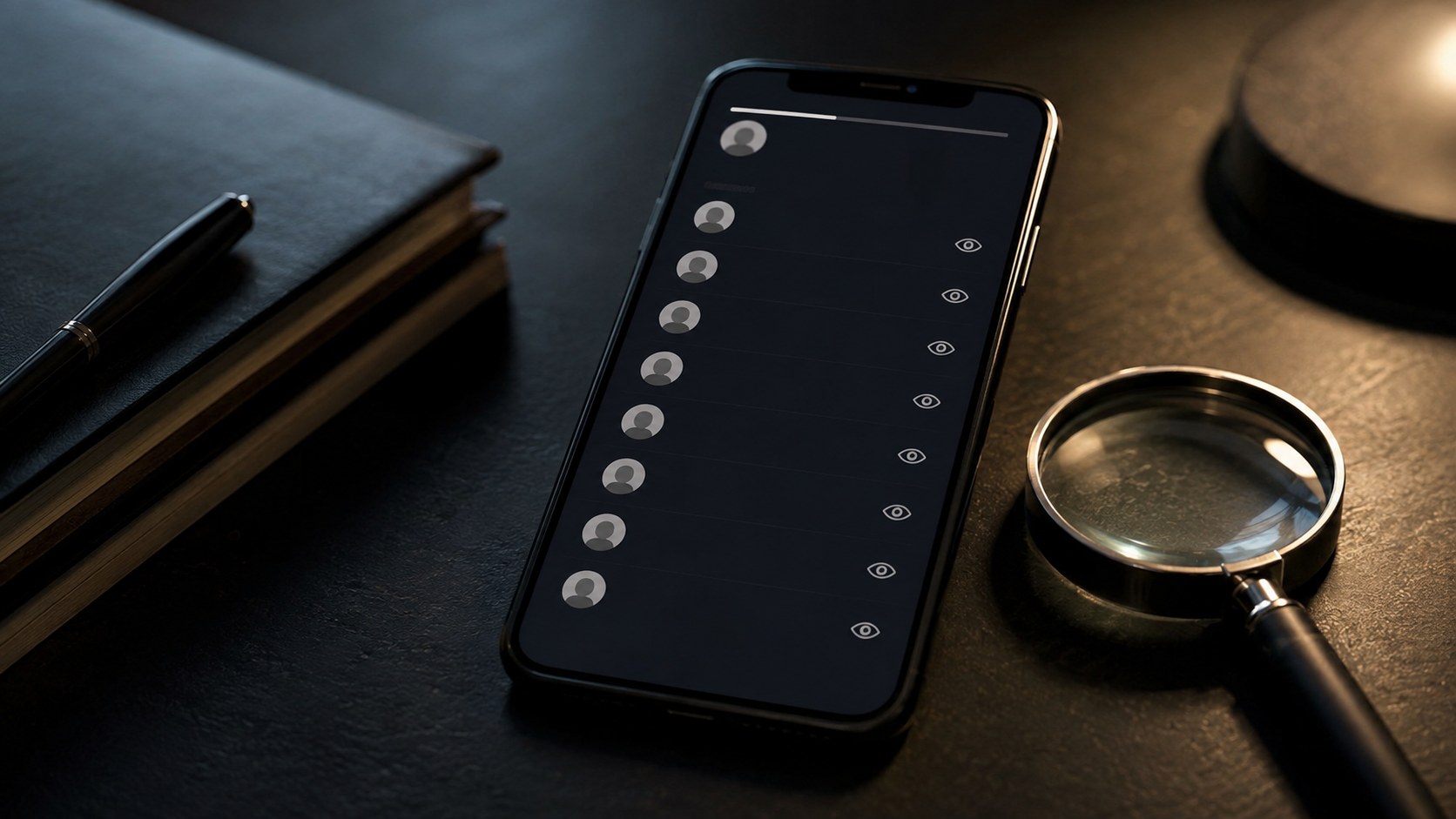
No — the order of names under your Instagram Story is not a stalker ranking, and it doesn’t show who’s secretly obsessed with you. Here’s the honest version. Under roughly fifty views, the list is simply reverse-chronological: newest viewer on top. Once you pass about fifty, Instagram reorders it by an engagement algorithm — and here’s the twist that dismantles the whole myth: it weighs your activity toward someone as heavily as theirs toward you. So the person riding the top spot is usually someone you interact with a lot — whose profile you visit, whose DMs you answer — not a lurker fixated on you. The order is a mirror of mutual engagement, much of it your own, not a confession of anyone’s feelings. It can’t reveal a silent stalker who never interacts, and anyone watching through an anonymous viewer doesn’t appear on the list at all. Read it as engagement data, not romance.
The myth that won’t die
You’ve heard it. Probably repeated it. “Whoever’s first in your Story viewers is stalking you.” It’s one of those pieces of internet folklore that gets passed around as fact, screenshotted, turned into TikToks, and believed by millions.
It’s also wrong. Comprehensively, mechanically wrong. And the truth is more interesting than the myth, because once you understand what the order actually tracks, it stops being a source of paranoia and starts being a mildly useful — if noisy — read on your own habits. Let’s take the whole thing apart, gently.
The short answer, and the one-line why
Does the viewer order show who stalks you? No.
The one-sentence reason: the order reflects interaction, and a huge chunk of that interaction is yours — so the top viewer is more likely a mirror of your own attention than evidence of theirs. A stalker, by definition, watches without interacting. The very thing that would make someone a “stalker” is the thing the algorithm doesn’t reward.
Everything below just fills in that answer.
How the order actually works (briefly)
You don’t need the full engineering to debunk the myth — just two facts.
Under ~50 views, it’s chronological. When only a handful of people have seen your Story, the list is simply reverse-ordered by time: the most recent viewer sits on top, the first viewer drifts to the bottom. No mystery, no ranking — just a timeline. So if your Story has thirty views, “first in the list” literally means “watched most recently,” full stop.
Past ~50 views, an algorithm takes over. Once you cross roughly fifty viewers, Instagram stops caring about when someone watched and starts ordering by how connected the two of you are — the same broad engagement signals that shape your feed. Instagram has never published the formula, and notably, no per-person view count is ever shown. Repeat views from one person still register as a single viewer.
That’s the entire mechanism. Neither mode is a stalker meter. One’s a clock; the other’s a relationship score.
The misread that powers the whole myth
Here’s the crux, and it’s worth slowing down for. That engagement algorithm is bidirectional. It weighs your behaviour toward a person just as much as — arguably more than — theirs toward you.
Sit with that. If you’re forever checking a certain person’s profile, replying to their Stories, lingering on their posts, searching their name, then Instagram reads all of your activity as “these two are close,” and up they float in your viewer list. Even if, on their side, they barely think about you. The list is a two-way engagement mirror, and you’re supplying half the reflection — often the bigger half.
So when your crush lands at the top of your viewers? The most likely explanation isn’t that they’re pining for you. It’s that you’ve been the one doing the quiet checking, and Instagram is faithfully reflecting your own attention back at you. The “stalker” the myth points to is, more often than not, looking back from the mirror.
Why the myth is so incredibly sticky
If it’s this wrong, why does everyone believe it? Because it hits every button that makes a myth spread.
- We crave a simple story. “Top of the list = admirer” is tidy, dramatic, and emotionally satisfying. “A bidirectional engagement algorithm weighting mutual interaction signals” is not. Simplicity wins, accuracy loses.
- We’re pattern-seeking machines. Humans find meaning in noise — see faces in clouds, omens in coincidences. A name repeatedly near the top feels like a signal, so we invent a reason for it.
- Confirmation bias does the rest. You notice and remember the times your crush or your ex is on top; you forget the hundred times the list was just your mum and three randoms. The hits get logged, the misses vanish.
- The invisible algorithm invites folklore. Because Instagram won’t explain the order, the vacuum fills with theories — and the most emotionally charged theory travels furthest.
None of that makes the myth true. It just makes it believable, which is a very different thing. Folklore doesn’t need to be accurate to spread; it only needs to feel right.
What the order can — and can’t — tell you
Let’s be fair about the limits in both directions.
|
The order CAN loosely suggest… |
The order CANNOT tell you… |
|---|
|
Which accounts you interact with most consistently |
Who secretly has a crush on you |
|
Your warmest, most-engaged connections |
Who “stalks” your profile without ever interacting |
|
Roughly who Instagram rates as “close” to you |
How many times a specific person watched |
|
A rough read on mutual engagement |
Anything precise, numeric, or romantic |
The left column is the honest, modest value of the viewer order. The right column is everything the myth promises and the feature can’t deliver. Keep those straight and you’ll never be fooled by a viewer list again.
The silent-lurker problem (two ways)
Here’s where the stalker myth really falls apart, on its own terms.
First, silent profile-visiting alone is a weak signal. Someone who quietly looks at your profile but never likes, comments, reacts, or messages isn’t feeding the algorithm much of a relationship score. Two-way interaction moves the needle; passive lurking barely registers. So the very behaviour the myth is anxious about — silent watching — is the behaviour the order is least able to surface.
Second, and this is the kicker: truly anonymous viewers don’t appear in your list at all. Anyone watching your public Story through a logged-out, anonymous viewer never enters the “seen by” list in the first place. So if you’re genuinely worried about a specific person watching you covertly, the viewer order is doubly useless — it can’t flag silent lurkers, and it can’t show anyone who viewed anonymously. The person you’re suspicious of might not even be in the list you’re scrutinising.
While we’re here: the myth’s cousins
The stalker theory travels with a little family of related misbeliefs, and they fall for the same reasons.
- “The order is alphabetical / random.” Neither. It’s chronological, then engagement-ranked — messy to read, but driven by consistent signals, not chance or the alphabet.
- “Blocking someone changes my viewer order.” No. Your order reflects the accounts actually viewing and your engagement with them, not who you’ve blocked.
- “If I view someone a lot, I’ll be first in their list.” Only partly — their order also weighs their activity toward you, and the fifty-view threshold and timing all play in. You can’t reliably engineer your position in someone else’s list.
- “Screenshotting or checking the list repeatedly affects it.” It doesn’t. Looking at your own viewer list, however often, changes nothing about how it’s ordered.
Same root cause every time: an unexplained system, an emotionally charged question, and our very human habit of inventing a neat rule to fill the silence. Once you see the pattern, the whole genre of viewer-order theories loses its grip.
So what should you actually do with the order?
Honestly? Not much, emotionally. Read it for what it is — a rough, noisy indicator of who you’re most engaged with — and nothing more. Don’t mine it for romance. Don’t build a case for who’s obsessed with you. Don’t let a name at the top ruin your afternoon or inflate your hopes.
If you’re a creator or business, the order has a mild practical use: the accounts clustered at the top are, broadly, your most-engaged audience, which is worth knowing. For everyone else, the healthiest move is to notice the myth, smile at it, and scroll on.
The flip side: staying out of someone else’s order
There’s a practical corner of this worth flagging, because it’s usually the real reason people obsess over viewer lists. If the anxiety runs the other way — you don’t want your name showing up in someone else’s viewer list when you check their Story — the order isn’t your concern at all. Your visibility is.
And the fix for that is straightforward: view public Stories logged out, anonymously, so you never enter the seen-by list to begin with. Which is exactly what our tools are for.
Where Dumpor fits
Two honest connections to what we build.
First, the reassuring one: the viewer order can’t out anyone watching you anonymously, because anonymous viewers never appear in it. So the stalker myth is even weaker than it looks — the list you’re studying is incomplete by design.
Second, the practical one: if you’d rather watch someone’s public Story without landing in their viewer list and fuelling their own version of this myth, that’s the point of the anonymous Story Viewer — public Stories, no login, no entry in the seen-by list. The Instagram Profile Viewer does the same for public profiles, and the Followers & Following Viewer covers the curiosity about someone’s public connections — all without signalling a thing from your account.
The boundaries, as always: public accounts only, no login required or requested, and we’re independent of Instagram. We can’t tell you who’s “stalking” you — nobody can, because the platform doesn’t expose that — but we can let you look without becoming the subject of someone else’s viewer-order theory.
Myths worth clearing up
|
Myth |
Reality |
|---|
|
“The first viewer is stalking me” |
Under ~50 views it’s just the most recent viewer; after that, it’s engagement |
|
“The top of the list is my secret admirer” |
It usually reflects your activity toward them, not theirs toward you |
|
“The order shows who views my Story most” |
No per-person view count exists; repeat views count once |
|
“Silent lurkers show up near the top” |
Passive viewing is a weak signal; interaction is what ranks |
|
“The viewer list shows everyone who watched” |
Anonymous, logged-out viewers never appear in it at all |
|
“The order is the same for everyone” |
It’s personalised to your account’s relationships |
FAQ
Does the Instagram Story viewer order show who stalks me?
Why is my crush always first in my Story views?+
Most likely because you’ve been interacting with them — visiting their profile, watching their content, maybe searching their name. Instagram reads all of your activity as closeness and floats them to the top of your viewer list accordingly. It’s a mirror of your own attention far more than proof of theirs. The order reflects mutual engagement, and you’re supplying a big share of it.
Does the top viewer watch my Stories the most?+
Not necessarily, and there’s no way to know from the list. Instagram never shows a per-person view count, and if someone watches your Story five times they still appear once. The order reflects overall relationship signals, not how many times a particular person watched. “Who watched most” simply isn’t information the viewer list reveals.
Can I tell who’s viewing my profile anonymously?+
No. Instagram doesn’t show who visits your profile, and anyone watching your Stories through an anonymous, logged-out viewer never appears in your “seen by” list at all. So the viewer order can’t surface covert watchers on two counts — it can’t detect silent lurking, and it can’t show anonymous viewers. Any app claiming to reveal your “profile stalkers” is inventing the data.
What does the Story viewer order actually mean?+
It’s a rough indicator of engagement. Below about fifty views it’s just chronological; above that, Instagram orders viewers by how connected you are to them, based on signals like profile visits, DMs, reactions, and searches — in both directions. At most it loosely reflects your most-engaged connections. It carries no romantic meaning and no precise data, so it’s best read as a noisy engagement signal, nothing more.
Why do so many people believe the stalker myth?+
Because it’s emotionally satisfying and hard to disprove. Humans crave simple, dramatic explanations, we’re wired to find patterns in randomness, and confirmation bias makes us remember the times our crush was on top while forgetting the times the list was mundane. Add an algorithm Instagram won’t explain, and folklore fills the gap. The myth feels right, which is different from being right.
How do I stop appearing in someone’s Story viewer list?+
Watch their public Story logged out, through an anonymous viewer, so your name never enters the seen-by list. There’s no in-app way to view a Story invisibly while logged in — the moment you watch signed in, you’re recorded. An anonymous, logged-out viewer sidesteps that by not attaching your account to the view. It works on public accounts only.
The Story viewer order is a Rorschach test dressed up as data: people see in it whatever they’re anxious or hopeful about, and the internet handed them a myth that flatters the drama. Strip the folklore away and it’s mundane — a timeline for small Stories, an engagement ranking for bigger ones, and a ranking that quietly reflects your own habits as much as anyone else’s. It cannot show you a stalker, it cannot count who watched most, and it cannot see the anonymous viewers who never appear in it at all. So let the myth go; it was never telling you what you feared. And if the real worry was the other direction — not wanting your name in someone else’s list when you take a look — that’s a solvable thing, and viewing public Stories logged out is the answer. That quiet, no-footprint way to look is exactly the lane Dumpor was built for.

 Telegram bot
|
TikTok Viewer