What an Anonymous Instagram Viewer Really Does for a Reporter's Investigation
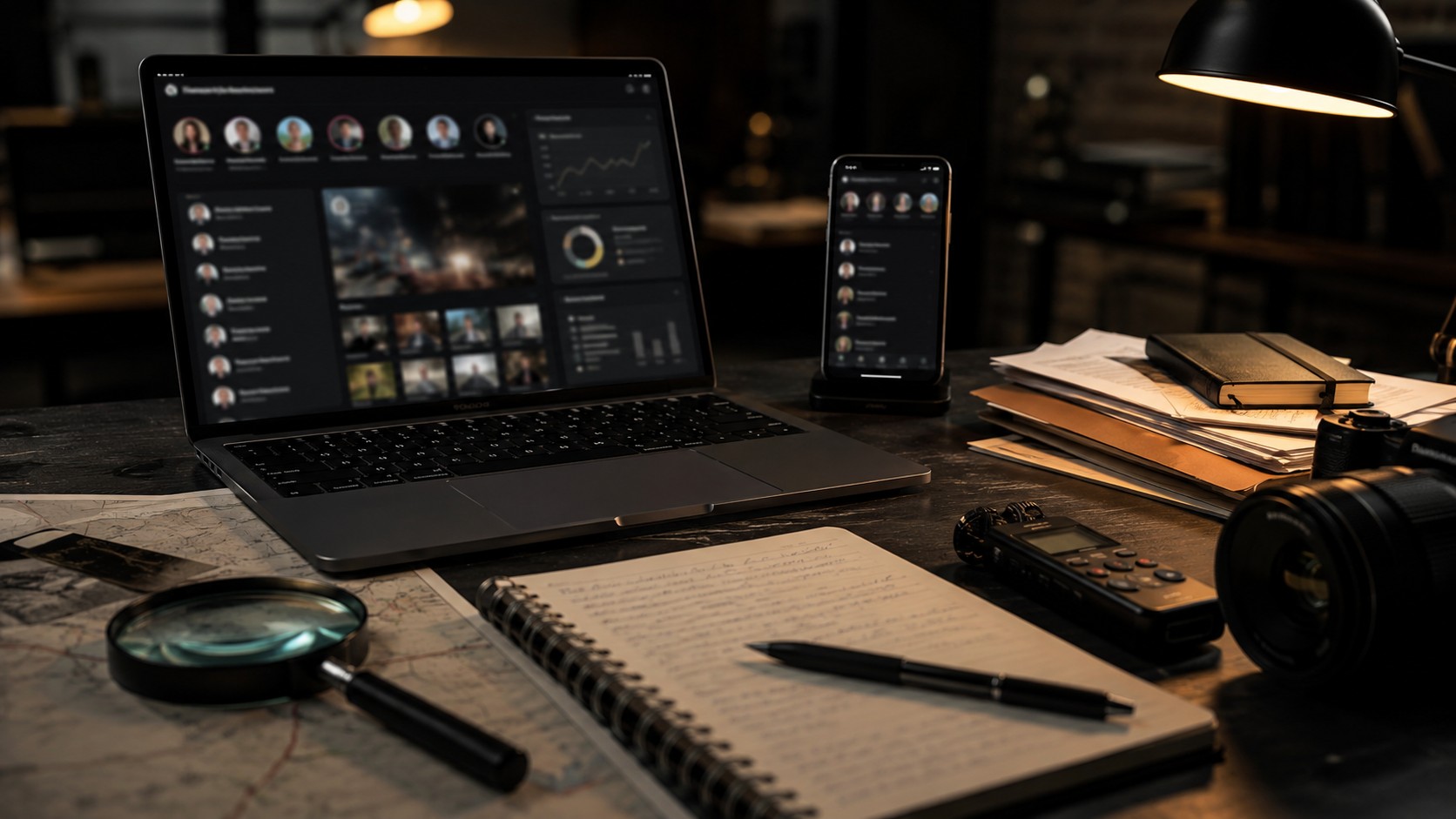
TL;DR: Reporters lean on anonymous Instagram viewers for one blunt reason — logged-in browsing leaves fingerprints. View a subject’s story from your outlet account and your name lands in their viewer list; tap the wrong pixel and you’ve followed the person you’re investigating. An anonymous viewer strips that risk out: you read public stories, profiles, reels, and following lists through a proxy, so nothing traces back to you or your newsroom. Beyond simple discretion, journalists use these tools to catch following-list changes that hint at a story before it breaks, to archive public posts before they get deleted, and to verify visual claims. The catch, and it matters: honest tools reach public content only. Private accounts stay private, and good newsroom practice keeps it that way. Everything below is how this actually plays out on a deadline.
Two in the morning. A reporter has a tip that a mid-level official is quietly connected to a company under scrutiny, and the only public thread so far is an Instagram account. The instinct is to open the app and start scrolling. The trained instinct is to stop — because opening it while logged in as, say, the paper’s social account is how you tip off a source, torch weeks of quiet work, and occasionally end up following the very person you’re supposed to be watching from a distance.
That gap between instinct and craft is the whole subject here.
Why a logged-in look is a liability
Instagram is chatty about who’s watching. Stories show the owner a viewer list. Your presence there isn’t hypothetical; it’s logged, timestamped, and sitting in someone’s notifications by breakfast. Profiles don’t ping the owner the same way, but the platform still ties every tap to your account, your device, and the advertising profile Meta keeps on you.
For most people that’s harmless. For a reporter working a sensitive story, it’s a leak waiting to happen. Consider what a single careless session can cost:
-
Your name (or your outlet’s handle) surfaces in the subject’s story viewers, flagging that the press is circling.
-
One misplaced tap follows or likes the account, which is both an embarrassment and, worse, a tell.
-
Every view gets stitched to your real identity and location, undoing any pretense of a low profile.
-
If the account owner is media-savvy, patterns in who’s viewing can point straight back to a newsroom.
None of that is paranoia. It’s the same operational logic intelligence analysts and open-source investigators have used for years, just applied to a beat reporter with a phone.
What anonymous viewing actually buys the newsroom
Strip it down and an anonymous viewer solves a single problem elegantly: it lets you look without being seen looking. The request travels through the tool’s own server on a rotating address, Instagram serves back the public data, and your identity never enters the transaction. No view receipt. No account link. No footprint.
Here’s the practical payoff, laid side by side:
|
The reporting need |
Logged-in Instagram |
Anonymous viewer |
|---|
|
Watch a subject’s story |
Shows up in their viewer list |
Invisible, no receipt |
|
Browse posts and reels |
Tied to your ad profile |
No identity attached |
|
Check a following list |
Login wall since 2022 |
Surfaced without an account |
|
Accidental follow or like |
Always a risk |
Impossible, you’re not logged in |
|
Links your outlet to the story |
Yes |
No |
That last row is the one editors care about. Keeping the investigation and the institution separate isn’t a nicety — it’s source protection.
The reporting that actually depends on it
Abstract benefits are easy to nod along to. The concrete newsroom use cases are where this earns its keep.
Following lists as an early-warning system. Who a public figure starts following often moves before the announcement does. A footballer quietly follows a new club days ahead of a transfer. A politician’s staffer starts tracking a lobbying firm. Sports desks and political reporters have treated these shifts as primary signals for years, and Instagram’s follower and following viewer surfaces them without you ever appearing on the account’s radar.
Verification of visual claims. A photo or clip circulating as breaking news might be real, staged, mislabelled, or lifted from an event three years ago and a continent away. Pulling the public post lets you begin the checks — reverse image search, a squint at the background, a cross-reference against satellite imagery or known landmarks.
Monitoring without tipping anyone off. Watching a company’s or a rival campaign’s public stories and posting cadence, day after day, without a single view notification firing or a company account showing its hand.
Archiving before it vanishes. Posts get deleted. Accounts go private. A story that was public at 9 a.m. can be gone by noon, and with it your evidence. Capturing public content while it’s live is basic hygiene for anyone who may have to stand behind a claim later.
Geolocation and pattern spotting. Tagged locations, recurring backgrounds, timestamps that suggest when someone is active — small fragments that mean little alone but, cross-referenced, build a picture.
Notice that not one of those is “unmask a private account.” That distinction is the spine of ethical practice, and we’ll come back to it.
Where the viewer sits in a real verification workflow
Let’s be honest about scope. An anonymous viewer is step one, not the whole investigation. It gets you clean, discreet access to the raw public material. What you do next is where journalism happens.
A typical open-source verification chain looks something like this:
-
Access the public content anonymously, so the subject never knows you were there.
-
Preserve it immediately — screenshots, downloads, archived URLs — because it can disappear.
-
Run reverse image searches across engines to find earlier or original uses.
-
Inspect available metadata and visual cues for time, place, and authenticity.
-
Cross-reference against maps, satellite views, other accounts, and offline records.
-
Corroborate with at least one independent source before a word gets published.
The viewer covers the first two links cleanly. For that second link — preservation — Instagram’s story downloader lets you save public stories and clips at their original quality, which matters when a blurry re-screenshot won’t survive scrutiny. Everything after that is old-fashioned reporting discipline. The tool doesn’t verify anything for you. It just makes sure you were never a variable in the story you’re trying to observe.
The line you do not cross
This is the part we won’t soft-pedal, because getting it wrong isn’t a technical error — it’s an ethical and sometimes legal one.
Viewing and recording public information is, in most jurisdictions, entirely legitimate for a journalist. The account owner chose to make it public. The moment you’re inside a private account without consent, or bypassing a login wall through borrowed credentials, or impersonating someone to gain access, you’ve left journalism and entered something a media lawyer will not enjoy explaining. Legitimate open-source work stays on public data, documents every step for chain-of-custody purposes, and stops the instant a method would breach a platform’s terms.
A short compass for the newsroom:
-
Public accounts and public posts. That’s the sandbox. Stay in it.
-
No password harvesting, no “unlock private” services — those are scams or crimes, sometimes both.
-
No impersonation to coax access out of a subject or their circle.
-
Under GDPR and similar regimes, “publicly available” is not a blanket permission slip; purpose and proportionality still apply, so weigh the public interest.
-
Preserve your method, not just your findings, so the work holds up to an editor and, if it comes to it, a court.
If you want the fuller breakdown of where observation ends and something riskier begins, we walk through it in our guide on where the legal line sits between scraping and viewing. Worth a read before your next investigation, honestly.
What these tools can’t do (and why that’s fine)
A quick reality check, because overselling helps nobody.
An anonymous viewer will not open a private profile — full stop, no matter what a shadier competitor advertises. It won’t verify anything on its own; a real story still needs corroboration. It won’t preserve content you didn’t think to save before it was deleted. And it isn’t a licence to harass, stalk, or dogpile a private individual under a press banner.
What it does do, it does well: discreet, account-free access to public material, so the observer stays out of the observed story. For serious reporting, that’s precisely the boundary you want the tool to respect.
Where Dumpor fits for reporters
We built Dumpor around exactly this kind of use, and we’re upfront about the limits. Every request routes through an anonymous proxy, so Instagram sees the proxy address rather than yours, and your name never lands in a viewer list. No account. No login. No sign-up trail connecting your newsroom to a subject. Seven Instagram tools plus a TikTok viewer, all free — no “pro” tier gating the feature a journalist actually needs at 2 a.m. on deadline.
Public only, always. We don’t bypass privacy settings and we don’t pretend to. For a reporter, that constraint is a feature: it keeps the work clean, defensible, and squarely on the right side of the line.
A short checklist before you start digging
- Never log in with an identifiable account. Use an anonymous viewer for the first look and the routine monitoring.
- Preserve first, analyse second. Save the public content the moment you see it; assume it’ll be gone tomorrow.
- Stay public. If a lead lives behind a private wall, find another route — a source, a record, a document — not a shortcut.
- Document your method. Note what you accessed, when, and how, for chain of custody.
- Corroborate before you publish. The viewer is where verification starts, never where it ends.
Follow that and the tool stays what it should be: a quiet way to observe, not a way to get caught or get sued.
The short version, one more time
Anonymous Instagram viewers matter to journalists because reporting on someone shouldn’t announce itself to that someone. They give discreet, account-free access to public content, flag signals like following-list shifts, and help preserve material that has a habit of disappearing. They are not a skeleton key to private lives, and the good ones never claim to be. Used with judgment — public data, careful preservation, real corroboration — they slot neatly into a verification workflow that holds up long after the story runs.
If you’re on an investigative desk, in an OSINT unit, or running a research team and you’d like to talk through a workflow — or ask about business and API access to the Dumpor toolset for newsroom use — reach out and leave us a request. We’ll give you a straight, no-spin answer.
FAQ
Frequently asked questions
Is it legal for a journalist to view someone’s public Instagram anonymously?+
In most jurisdictions, yes. Looking at and recording information a person has published publicly is standard, lawful practice for reporters and open-source researchers. The account owner made that content visible to any logged-in user, and an anonymous viewer simply reaches the same public data without attaching your identity. Where it turns risky is the private side of the line: accessing a locked account without consent, bypassing a login wall with borrowed credentials, or impersonating someone. Stay on public content, document your steps, and you’re on solid ground — though for sensitive stories, a quick word with your editor or a media lawyer never hurts.
Will the person I’m researching know I looked?+
Not if you use a proper anonymous viewer instead of your logged-in app. Instagram populates a story’s viewer list from logged-in accounts, so when the request travels through a proxy and no account of yours is attached, no view event fires under your name. You won’t appear in the viewer list, and profile or following-list checks don’t notify the owner either. That invisibility is the entire operational point for a reporter who can’t afford to tip off a subject.
Can these tools get me into a private account for a story?+
No, and treat anything promising otherwise as a red flag. A private profile is walled to approved followers by design, and there’s no legitimate technical route around that. Services claiming to “unlock” private accounts are typically phishing for credentials or worse. Ethical open-source journalism stays on public material; if a lead lives behind a private wall, the answer is traditional reporting — a source, a document, a record — not a dubious workaround that a newsroom lawyer would never sign off on.
Why not just use a burner Instagram account instead?+
You can, and some reporters do, but it carries its own hazards. A burner still logs views, can still accidentally follow or like, and can be unmasked through metadata, phone-number recycling, or pattern analysis if a subject is sophisticated. It also takes maintenance and creates a footprint of its own. An anonymous viewer sidesteps all of that for the common task — reading public stories, profiles, and following lists — with nothing to set up, nothing to slip up on, and no account to trace back to you.
How do journalists preserve Instagram evidence before it’s deleted?+
Speed and redundancy. The working assumption is that any public post can vanish within the hour, so reporters capture it the moment they find it: screenshots with visible timestamps and URLs, downloads of the original media, and archived links through preservation services. Saving public stories and reels at their native quality — rather than a compressed re-screenshot — matters when the material has to survive editorial and legal scrutiny later. Preserving your method alongside the file, not just the file itself, is what keeps the evidence defensible.
Where does anonymous viewing fit in the wider OSINT process?+
At the front. It’s the discreet-access layer that gets you the raw public content without exposing you to the subject. From there the real verification begins — reverse image searches to trace a photo’s origin, metadata and visual checks for time and place, geolocation against maps and satellite imagery, and cross-referencing with independent sources. The viewer never verifies anything on its own; it simply ensures you gathered the starting material invisibly. Everything that turns raw content into a publishable claim is reporting craft, not tooling.
Is Dumpor suitable for professional newsroom research?+
For the public-data, anonymous-access part of the job, yes. Dumpor routes every request through an anonymous proxy, needs no account or login, and covers stories, profiles, reels, highlights, tagged posts, and follower or following lists — the material reporters check most. It’s free, with no pro tier locking essential features away. The deliberate limit is that it handles public content only and never bypasses privacy settings, which for serious journalism is exactly the constraint you want. Pair it with disciplined verification and preservation, and it slots cleanly into a professional workflow.

 Telegram bot
|
TikTok Viewer