Why Instagram Music Search Shows Fewer Songs on a Business Account
TL;DR
If popular songs are missing from Instagram Music on a Business Account, the account may not be broken at all.
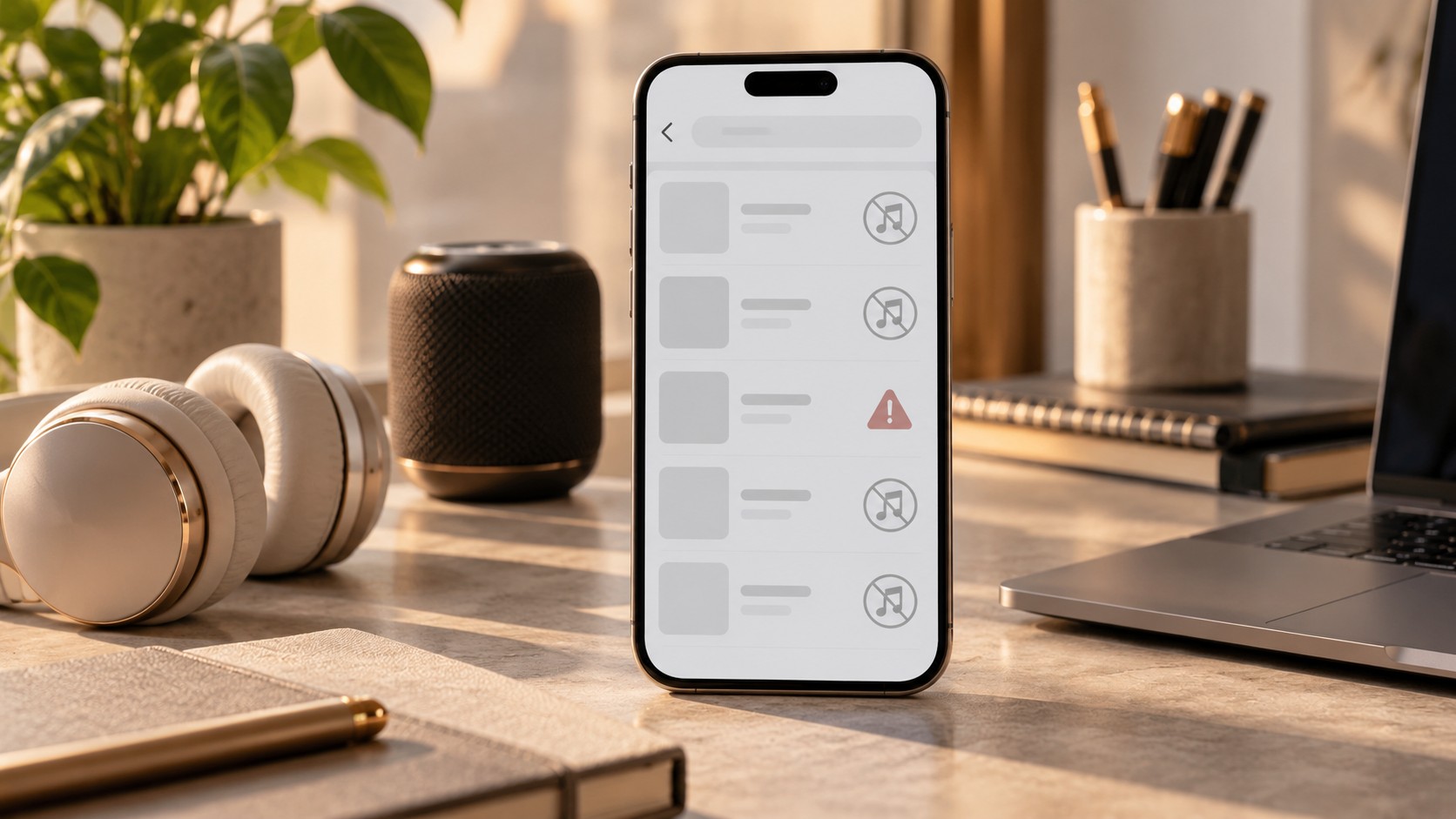
Meta’s licensed music library is primarily intended for personal, non-commercial use. Because a Business profile represents commercial activity, certain Business Accounts and certain types of content receive restricted access to licensed songs. Music availability can also change by country, rights-holder agreement, content type, and intended use.
That explains a familiar situation:
-
a Personal Account can find the song;
-
a Creator Account may find it;
-
a Business Account searches the exact title and gets nothing.
For a Business Account, try this order:
-
Confirm the exact song and artist.
-
Compare another known commercial track.
-
Check whether the problem affects many mainstream songs or only one.
-
Confirm that you are using a Business profile.
-
Consider regional licensing differences.
-
Update Instagram and retest in Instagram’s native music picker.
-
Check Meta Sound Collection for commercially usable alternatives.
-
If the content will become an ad, verify the music separately for advertising use.
Do not assume that switching from Business to Creator magically gives your company legal permission to use any song that appears.
Availability and usage rights are related, but they are not the same thing.
The Music Search Is Often Working Exactly as Designed
The symptom feels like a bug.
You type the exact title of a famous song. Instagram offers obscure alternatives, covers, unrelated tracks, perhaps nothing useful at all. A colleague opens another Instagram account and finds the song in seconds.
Same phone.
Same app.
Different result.
The missing variable is often the account itself.
Meta has licensing agreements with music rights holders. Those agreements define where, how, and by whom particular music can be used. The broad licensed library is designed around personal, non-commercial expression, so Meta limits access for certain commercial accounts and commercial contexts.
A Business Account is therefore not guaranteed the same music catalog as a Personal or Creator profile.
That is the first thing to diagnose.
Not the Wi-Fi.
Why Business Accounts Have a Smaller Music Library
A commercial brand using a hit song in a promotional Reel is not legally equivalent to an individual adding that song to a holiday Story.
The underlying copyrighted works may involve several layers of rights, including rights in the composition and the sound recording.
Meta can license music for particular uses without necessarily licensing every track for every commercial use on the platform.
As a result, Instagram restricts parts of its licensed music library for some Business Accounts.
The practical effect is simple: music that exists on Instagram can still be unavailable to your account.
That is not contradictory.
It is licensing.
Business vs. Creator vs. Personal Music Access
The exact library can vary, so no table can promise that every account will see precisely the same songs. The broad pattern looks like this:
|
Account type |
Typical music-library situation |
|---|
|
Personal |
Broad access to licensed music where available |
|
Creator |
Often broader licensed-music access than Business |
|
Business |
Can have significant commercial-use restrictions |
|
Any account in unsupported/restricted region |
Library may be narrower regardless of account type |
A Creator profile is still a professional account, but Meta treats creators and businesses differently in several product areas.
That is why changing the account type can visibly change search results.
But there is a trap here.
Seeing a song in the picker does not automatically grant every conceivable commercial right to use it.
More on that shortly.
How to Tell Whether Licensing Is the Real Problem
Do not diagnose the issue using one obscure song.
Run a small test.
Search for:
-
the exact song you originally wanted;
-
another current mainstream commercial track;
-
a well-known older song;
-
several tracks available inside Meta’s commercial music options.
If only one song is absent, the restriction may concern that specific recording, rights holder, territory, or version.
If a large portion of mainstream licensed music is missing while commercially cleared alternatives remain available, your Business Account’s music restrictions are the more likely explanation.
That pattern tells you much more than repeatedly searching the first title.
Why the Song Appears on Your Personal Account
This is perhaps the most convincing clue.
Imagine a café owner has two Instagram profiles:
@anna.personal@annas.cafe
Anna searches for the same song on the same iPhone.
The song appears on the personal profile.
It vanishes on the café’s Business Account.
Reinstalling Instagram is unlikely to help because both searches are already running through the same installed app.
Instagram is returning different catalogs based on account context.
When that happens, investigate licensing and account type first.
Why Creator Accounts May Show More Music
Creators frequently need music as part of cultural, entertainment, educational, or personality-led content.
Instagram therefore often exposes a broader music experience to Creator profiles than to Business profiles.
This has encouraged a popular piece of internet advice:
“Switch your Business Account to Creator and all the music comes back.”
Technically, the library may change.
Legally and operationally, that advice is incomplete.
If the account represents a company and the music is being used commercially, changing the label on the Instagram account does not rewrite copyright law or produce a private license from the artist.
Account type controls platform functionality.
It does not manufacture music rights.
Should a Business Switch to Creator Just for Music?
Usually, that should not be your first fix.
Before switching, consider what else the Business Account is being used for:
-
advertising;
-
Meta Business Suite;
-
third-party integrations;
-
reporting;
-
team workflows;
-
ecommerce;
-
customer communication;
-
connected Facebook assets.
Changing account type can alter other functionality.
More importantly, if the real objective is to put copyrighted music behind promotional content, expanding the search results does not answer the underlying rights question.
A better question is:
What music is actually cleared for the commercial content we are making?
Less exciting than “How do I unlock every trending song?”
Much more useful.
Meta Sound Collection: The Business-Friendly Alternative
If your Business Account lacks the wider licensed music library, Meta provides Sound Collection.
Meta describes Sound Collection as a library containing more than 14,000 royalty-free songs and sounds that can be used in Reels and Instagram Stories, including for commercial purposes such as advertising.
That makes it particularly relevant for businesses.
Instead of trying to smuggle a chart hit through the wrong account configuration, you can select music intended for commercial use.
Sound Collection includes material across different:
-
genres;
-
moods;
-
tempos;
-
instrumental styles;
-
sound effects.
The trade-off is obvious.
You may not get the exact pop song currently attached to every second Reel.
You do get a much cleaner commercial-use route.
Licensed Music and Sound Collection Are Not the Same Library
Treat them as separate buckets.
|
Library |
General purpose |
|---|
|
Instagram licensed music |
Personal/non-commercial musical expression under Meta’s licensing agreements |
|
Meta Sound Collection |
Royalty-free music and sounds suitable for commercial uses supported by Meta |
This explains why searching Instagram Music for a famous artist and searching business-safe music can produce completely different worlds.
You are not looking at two versions of the same catalog.
The rights model is different.
Why One Famous Artist Appears but Another Does Not
Music licensing is not an all-or-nothing agreement covering every record ever released.
Different tracks can involve different:
-
labels;
-
publishers;
-
territories;
-
recordings;
-
agreements;
-
commercial permissions.
Even one artist may have songs distributed under different arrangements.
So this can happen:
-
Song A appears.
-
Song B by the same artist does not.
-
A remix of Song B appears.
-
An unofficial “original audio” using part of Song B also appears.
Do not interpret that inconsistency as proof that Instagram Search is broken.
The underlying rights can be inconsistent too.
Country and Region Can Change the Results
Meta explicitly notes that licensed music may not be available in some countries or regions.
Music rights are frequently territorial.
A track licensed for Instagram use in one market may not have equivalent availability somewhere else.
That means two Business Accounts with apparently identical settings can still see different music libraries if they operate in different places.
If a remote teammate says, “It appears for me,” ask which account and which country they are using.
Those two details matter.
A VPN Is Not a Music-Licensing Strategy
Changing an apparent location should not be treated as a legitimate method for acquiring rights that your business does not have.
Even if an interface changes, the business’s underlying commercial use and relevant rights have not magically changed with an IP address.
For brand publishing, solve the licensing problem rather than cosmetically changing the search experience.
Why Saved Audio May Become Unavailable on a Business Account
You can discover an audio page while browsing Reels and save the sound for later.
Then you return to create content from the Business Account and cannot use it.
That is possible.
Discoverability does not guarantee usability.
Instagram can let you encounter a public Reel using a particular track without granting your Business profile permission to attach the same licensed music to new commercial content.
Think of the audio page as discovery.
Think of the publishing music picker as permission-aware availability.
They answer different questions.
“Original Audio” Is Not Automatically Commercially Safe
This deserves its own section because the myth is stubborn.
Instagram may label a Reel’s soundtrack Original audio.
That label does not prove that every sound inside the recording was created by the uploader or released for commercial reuse.
An “original audio” clip could contain:
-
someone’s own voice;
-
genuinely original music;
-
background music playing in a venue;
-
a remix;
-
a mashup;
-
copyrighted music embedded during editing.
Therefore:
Original audio label ≠ commercial license.
Meta’s copyright guidance is broader than the label on the Reel. Simply finding music online, seeing other accounts use it, buying the song, or giving credit does not by itself establish permission to use copyrighted material.
If the music matters commercially, establish the rights.
Do not infer them from an Instagram label.
Business Music vs. Branded Content
Branded content adds another commercial layer.
If a creator receives money, free products, services, or another exchange of value to create content involving a business partner, Meta’s branded-content rules can require the Paid Partnership label.
That disclosure does not itself provide music rights.
A creator may have access to a song in the Creator music library while preparing a branded Reel, yet the commercial nature of the publication can make rights more complicated than an ordinary personal post.
Three separate questions exist:
-
Can the account find the track?
-
Does Instagram allow the track in this publishing context?
-
Does the intended commercial use have the necessary rights?
Do not collapse them into one.
Business Music vs. Reels Ads
Organic Reels and paid Reels advertising are also different contexts.
For advertising, Meta provides commercially appropriate music options, including Sound Collection and other music functionality available in Ads Manager.
A song that worked in an organic Reel should not automatically be assumed safe or eligible when that Reel becomes an ad.
If your content will eventually be boosted, build that possibility into the music decision before editing the entire video to a particular beat.
Otherwise you may create a beautiful 17-second edit whose every transition depends on a song you cannot use in the campaign.
Painful.
Preventable.
Why Music Can Disappear From Search Later
Rights agreements change.
A track available this month may not necessarily remain available forever in every country, account type, or content format.
Catalogs can change because of:
-
licensing updates;
-
territory changes;
-
rights-holder decisions;
-
account eligibility;
-
commercial-use restrictions.
Therefore, an old screenshot proving that the song once appeared does not guarantee today’s availability.
Instagram’s music catalog is a licensed service.
Not a permanent music archive.
Missing From Search vs. Muted After Publishing
These problems are related to audio but they are not the same problem.
Missing from Search
You are creating content and cannot find the song in the music picker.
Investigate:
-
Business Account restrictions;
-
region;
-
licensing;
-
track/version availability;
-
app/account differences.
Reel Already Published, Now Silent or Muted
The audio existed when the content was posted but playback later changed.
That can involve a different set of causes, including later rights or availability changes.
This article is about the first situation.
Likewise, if your goal is obtaining the best available public Reel media rather than diagnosing the creator music library, our guide to downloading Instagram Reels in HD covers that separate workflow.
Do not mix publishing rights with playback troubleshooting.
Why Updating Instagram Sometimes Helps—and Often Does Not
An outdated app can absolutely cause interface oddities.
So yes:
-
Update Instagram.
-
Close it completely.
-
Reopen it.
-
Search again.
But keep expectations sensible.
An update can fix:
-
a missing interface control;
-
a loading problem;
-
an old search bug.
It cannot expand a music license attached to your Business Account.
If Personal and Business profiles on the same current app show different libraries, licensing is a stronger explanation than corrupted cache.
Logging Out and Reinstalling: Low on the List
The internet loves these fixes because they are easy to write.
They are not equally useful.
Logging out and back in can refresh an account session.
Reinstalling Instagram can repair damaged local app files.
Neither changes your business status or Meta’s rights agreements with record labels.
Do basic technical troubleshooting once.
Then stop circling the phone and investigate the account.
Search the Exact Song Version
Sometimes the account has access, but you are searching for the wrong recording.
Try:
-
exact track title;
-
artist;
-
featured artist;
-
remix title;
-
acoustic/version name;
-
alternate spelling.
A radio edit and remix can have different licensing availability.
Do not assume that because one version is blocked, every recording with the same chorus must be blocked.
Conversely, the existence of an obscure cover does not mean your Business Account somehow has rights to the original hit.
Why Third-Party Schedulers Can Show Different Music
Publishing tools do not necessarily reproduce Instagram’s native music picker exactly.
A third-party scheduler may use Meta’s APIs and expose only the tracks or music features available through that integration.
Buffer, for example, explicitly notes that its selectable results can differ from Instagram’s own library.
So if you cannot find a song inside a scheduler:
-
Open Instagram directly.
-
Switch to the correct Business Account.
-
Create a test Reel without publishing it.
-
Search Instagram’s native Audio/Music picker.
If the song appears natively but not in the scheduler, the scheduler is the likely boundary.
If it is absent in both, investigate account and licensing restrictions.
A control test saves a lot of guesswork.
Do Not Upload the Song Manually as a “Workaround”
Suppose Instagram’s Business music search does not contain a hit song.
You own the MP3.
Could you simply add it to the video in Premiere, CapCut, Final Cut, or another editor and upload the finished file?
Technically, audio can be embedded in a video file.
That does not solve the rights issue.
Meta’s copyright guidance explicitly warns that buying or downloading content does not necessarily give you the right to publish it. Nor does crediting the artist.
If the library restriction exists because the track is not cleared for your commercial use, embedding the same recording manually is not a clever loophole.
It is the same music.
Does Credit Make Commercial Music Okay?
No.
Credit can be courteous.
It is not a substitute for a license.
Writing:
Music: Famous Artist — Famous Song
does not create the rights your company needs.
Neither does:
No copyright intended.
Copyright is not defeated by a polite caption.
Use music you created, properly licensed music, or a commercial-use library appropriate to the project.
Better Music Options for Business Reels
When a commercial track is unavailable, you still have choices.
Meta Sound Collection
The most obvious first-party option for business-safe Meta content.
Properly Licensed Stock Music
Commercial music libraries can provide licenses designed for brand and advertising use. Read the actual license scope, especially for paid social advertising.
Commissioned Music
For recurring brand content, custom music can be surprisingly practical. Make sure the agreement clearly defines the usage rights.
Your Own Original Audio
Voiceovers, product sounds, ambient recordings, interviews, and legitimately original music can work particularly well in Reels.
Original does not have to mean silent and corporate.
A good voice, a coffee grinder, footsteps, packaging sounds, or a sharp edit can carry a Reel without borrowing the week’s biggest chorus.
Match the Music Choice to the Future Use
Before choosing audio, ask:
-
Is this organic brand content?
-
Could we boost it later?
-
Is this an advertisement from day one?
-
Is a partner or creator involved?
-
Will the video be reused on our website?
-
Will it be cross-posted elsewhere?
-
Do we need this asset for six months?
The wider the intended use, the more useful a clear commercial license becomes.
A track that works only inside one Instagram publishing flow may be awkward when the marketing team later asks for the same video on three other channels.
Plan one step ahead.
A Quick Diagnostic Table
|
Symptom |
Likely explanation |
Best next check |
|---|
|
Many famous songs missing on Business |
Commercial licensing limits |
Account type + Sound Collection |
|
Song appears on Personal but not Business |
Account-specific access |
Business library restrictions |
|
One song missing everywhere |
Track/rights availability |
Search exact version |
|
Colleague abroad can find it |
Territorial licensing |
Country/region |
|
Native Instagram has it, scheduler does not |
Integration limitation |
Scheduler support |
|
Saved audio cannot be reused by Business |
Discovery ≠ reuse permission |
Native business picker |
|
“Original audio” contains a hit song |
Attribution does not prove rights |
Verify music rights |
|
Music works organically but not in an ad |
Advertising rules differ |
Commercial/ads music options |
This table is the article in miniature.
Start with the pattern.
Can Dumpor Unlock Missing Instagram Music?
No.
Music-library access is controlled by Instagram, Meta’s licensing agreements, account type, region, and publishing context.
Dumpor can help with supported public Instagram research without requiring access to your Business Account. It cannot alter Instagram’s licensed-music permissions or unlock commercial tracks unavailable to your profile.
Nor should any public viewer ask for your Instagram password just to “activate” music.
That is not how music licensing works.
Research the Sound Before Building the Reel Around It
If your team is following a trend, confirm the audio availability from the actual publishing account before editing.
Do not let a designer build a frame-perfect video around a track found on their personal Instagram account and assume the company account will have it later.
Instead:
-
Open the Business Account.
-
Search the track.
-
Verify that it can actually be selected.
-
Confirm whether the asset may become paid media.
-
Only then lock the edit.
For Story-based projects where preserving audio during legitimate saving is the concern rather than library access, see our separate guide to downloading Instagram Stories with sound.
Different problem. Different workflow.
The Five-Minute Business Music Audit
When Instagram Music suddenly feels empty:
-
Confirm you are on the expected Business Account.
-
Search three or four known mainstream songs.
-
Search the exact artist/title of the needed track.
-
Compare another account only as a diagnostic test.
-
Check whether your country could affect availability.
-
Test inside Instagram rather than only through a scheduler.
-
Review Sound Collection.
-
Decide whether the content is organic, branded, boosted, or paid.
-
Do not manually embed copyrighted music merely to bypass the picker.
-
Select a track whose rights fit the real commercial use.
That process usually tells you whether you have a technical problem or simply the wrong library for the job.
The distinction matters.
FAQ
Frequently Asked Questions
Why can’t I find popular songs on my Instagram Business Account?+
Meta restricts access to parts of Instagram’s licensed music library for certain Business Accounts because that library is intended primarily for personal, non-commercial use. Region, content type, and individual licensing agreements can also affect availability.
Why does my Creator Account have songs that my Business Account does not?+
Instagram can expose different music libraries to different account types. Creator profiles often have broader access to licensed music than Business profiles, while Business Accounts are more likely to face commercial-use restrictions.
Is my Instagram Music search broken?+
Possibly, but not necessarily. If many popular tracks are missing specifically on a Business Account while another account on the same device can find them, account-level licensing is a stronger explanation than a technical failure.
Will switching from Business to Creator restore Instagram Music?+
It may change which songs appear, but results vary. More importantly, switching account type does not itself grant your business commercial rights to use copyrighted music.
Is it legal to switch to a Creator Account just to use popular music for my business?+
Account type and copyright permission are separate matters. Seeing a song after changing account type does not automatically establish the rights needed for commercial use. Evaluate the actual usage and licensing.
What is Meta Sound Collection?+
Sound Collection is Meta’s royalty-free library of more than 14,000 songs and sounds. Meta states that its content can be used commercially, including in advertising, and it is a useful alternative for Business Accounts with restricted licensed-music access.
Can Business Accounts use trending audio?+
Sometimes. Business Accounts can have access to some trending or commercially usable audio, but they should not expect the same licensed catalog available to personal users.
Why is only one particular song missing?+
Rights can vary by track, recording, artist, territory, or version. Search the exact title, artist, remix, or recording before assuming the whole library is restricted.
Why can my colleague find the song but I cannot?+
Compare the account type, country, publishing surface, and exact song version. Music availability can differ by both account and region.
Can a VPN unlock Instagram Music for my business?+
A different apparent location does not create commercial music rights. Businesses should solve the underlying licensing question rather than treating a VPN as a rights-management workaround.
Why can I see a Reel using the song but not use the audio myself?+
Viewing a Reel and receiving permission to reuse its music are separate things. Your Business Account may be able to see content containing an audio track while being unable to select that track for new commercial content.
Is Original Audio always safe for a business to use?+
No. An Original audio label does not guarantee that all sounds in the recording were created by the uploader or licensed for commercial reuse. The audio can contain remixes, background music, or other copyrighted material.
Can I add the missing song in a video editor and upload it?+
Technically, a video file can contain embedded music. That does not provide copyright permission. Manually adding a track that Instagram does not offer to your Business Account is not a reliable licensing workaround.
Does giving the artist credit make the music okay to use?+
No. Attribution and permission are different concepts. Credit does not create a license to use copyrighted music commercially.
Why does the song appear in Instagram but not in my scheduler?+
Third-party publishing tools can have different API and music-library capabilities from Instagram’s native app. Search from the actual Instagram Business Account to establish whether the limitation belongs to Instagram or the scheduler.
Can I use the same music when I boost the Reel as an ad?+
Do not assume so. Paid advertising has different commercial-use requirements. Verify the music’s eligibility for advertising before building a campaign around it.
Will reinstalling Instagram restore the missing songs?+
It can help with a genuine app problem, but it cannot change licensing restrictions attached to the account, region, or content type. Test account-level explanations before repeatedly reinstalling the app.
Can Dumpor restore the full music library to a Business Account?+
No. Instagram and Meta control music availability. Dumpor cannot alter music licensing, account-type restrictions, or regional access.
An Instagram Business Account with fewer songs is not necessarily malfunctioning.
Quite often, the smaller library is the product working according to Meta’s music licenses.
That changes the troubleshooting strategy.
Do not spend an afternoon clearing caches because a chart song appears on your personal profile but not on the company account. First ask whether the Business Account is allowed to use that part of the licensed library at all.
Then choose the music for the job you are actually doing.
For commercial Reels, Stories, and advertising, a cleared track from Sound Collection, properly licensed music, or genuinely original audio can be far more valuable than forcing one fashionable song into a place where the rights do not fit.
Trending is temporary.
A usable license is much less temperamental.

 Telegram bot
|
TikTok Viewer