Can Someone See When You Save Their Instagram Post or Reel?
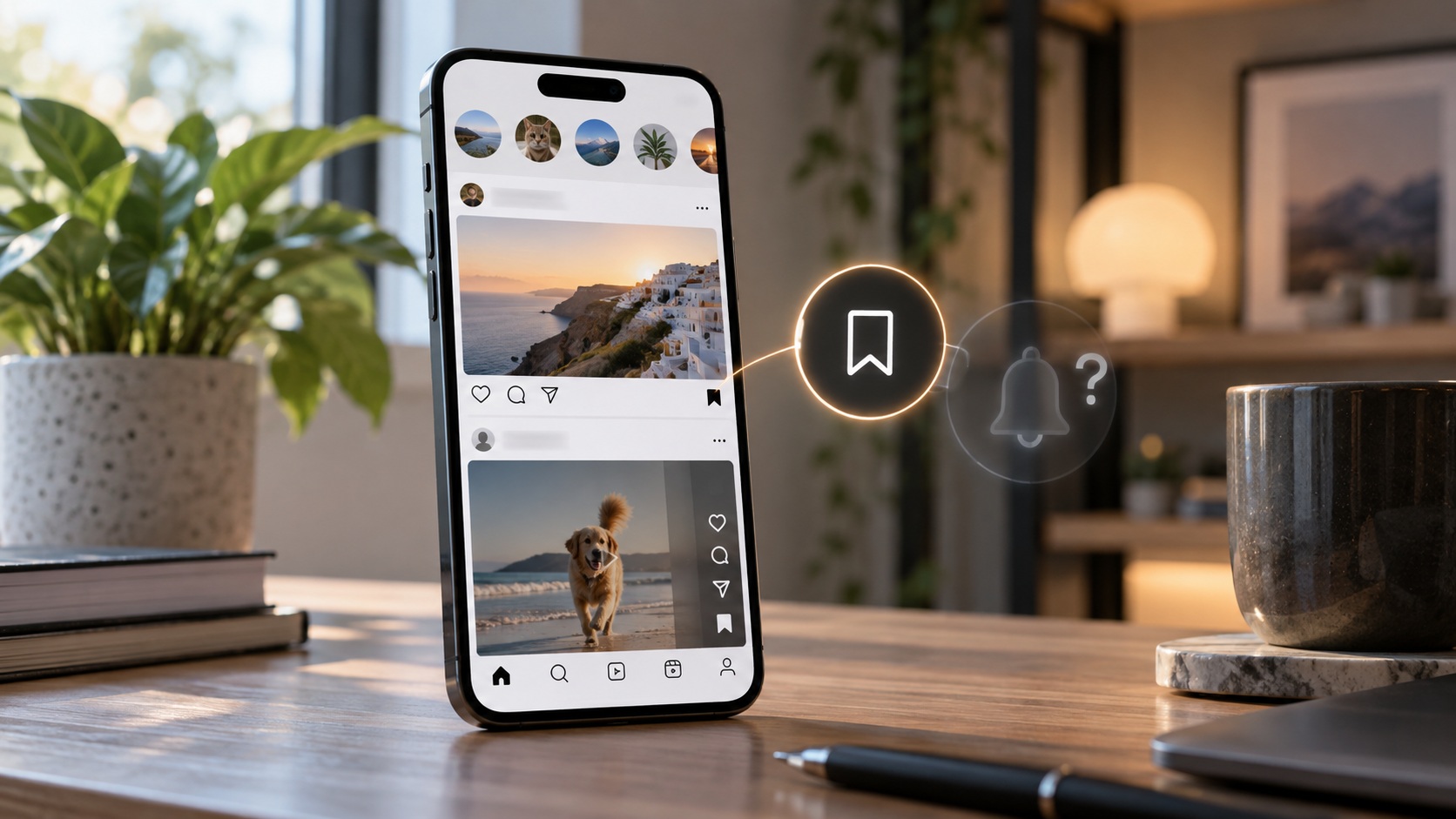
TL;DR
No. Saving a post or Reel to your private Saved section does not notify its creator or reveal your username to them. Professional accounts can see save totals in relevant Insights, but those figures do not identify the people behind individual saves.
A collaborative collection is different: the people sharing that collection can see its contents. Downloading a file, taking a screenshot, sending a post, and reposting are also separate actions. Do not apply the rules for ordinary bookmarks to disappearing messages. Finally, a saved item is a reference to content on Instagram, not a permanent backup of the original.
A recipe is worth keeping. So is a useful tutorial, a holiday idea, or a competitor’s product announcement. Then comes the hesitation: will tapping that small bookmark tell the creator who is interested?
At Dumpor, we recommend identifying what you mean by “save” before worrying about visibility. Instagram uses several ways to keep or share content, and their audiences differ. The ordinary private bookmark is straightforward; the confusion starts when it is mixed up with a download, a group collection, or a visible interaction.
What happens when you tap Save?
The bookmark control adds a reference to the post or Reel to your Instagram account. You can return to that item through Saved and organize it into collections. It does not automatically place the original photo or video in your device’s photo library.
Instagram’s Help Center states that the person whose post you save cannot tell that you saved it. Your private collection’s title and contents are not displayed on their profile or delivered to their inbox.
This applies to ordinary photo posts, carousels, and Reels saved through the platform’s bookmarking feature. For a carousel, the bookmark refers to the post; it should not be treated as an export of the particular slide you were looking at.
Save, download, screenshot, or share: compare the actions
Before interpreting a notification—or the absence of one—check the control you used. Several actions can help you revisit content, but they do not create the same result.
|
Action |
What it does |
What other people can see |
|---|
|
Save a post or Reel privately |
Adds a bookmark to your account |
No named save alert; eligible creator Insights may show an aggregate total |
|
Add it to a private collection |
Organizes an existing or new bookmark |
The collection is private to your account |
|
Add it to a collaborative collection |
Places it in a collection shared with selected people |
Participants can see shared items; the creator is not automatically a participant |
|
Use an available Reel Download option |
Saves a video file to your device |
This is separate from bookmarking; it does not send the creator a named download alert |
|
Screenshot an ordinary feed post |
Captures what is displayed on your screen |
No standard screenshot notification for that ordinary post |
|
Send a post through Direct |
Shares a reference in a conversation |
The recipient can see what you sent and who sent it |
|
Repost content using Instagram’s repost feature |
Shares content through a public-facing account feature |
Your repost can be visible to others |
|
Like or comment while saving |
Creates an additional interaction |
Your account is attached to the like or comment |
What can creators see in Instagram Insights?
Business and creator accounts can access performance data for eligible content. Relevant Insights can include saves alongside measures such as views, reach, likes, comments, and shares. The available interface and reporting details can vary.
A save count is a metric, not a list of names. It tells a creator something about how their content is being used without providing an identity for each person who bookmarked it.
Suppose a tutorial receives 40 saves. That may suggest people want to revisit it. It does not establish who those people are, whether they followed the instructions, or whether they downloaded a separate copy.
How owners can check their own save metrics
If you have a professional account, open your published post or Reel and look for View Insights, or use the relevant content reporting area in your professional dashboard. Inspect the save metric where it is available.
Collaborative collections: check who shares the folder
Collaborative collections are designed for saving with other people, including through individual or group conversations. A shared travel shortlist, for example, lets participants keep relevant posts together.
The important distinction is between the original creator and the collection participants. Saving a café’s post with your travel group does not automatically invite the café into that group. If the creator is already a participant, however, they can see what the group shares in that capacity.
Check the collection’s members before adding anything you intended to keep private. A shared folder’s contents should be treated as visible to its participants, regardless of their notification settings.
For a private reference library, use a collection without collaborators. Give it a clear name so that you can distinguish it from a similarly named group collection when the save menu opens.
Can someone tell if you save and then unsave?
Removing a private bookmark does not send the creator a named “unsaved” notification. It also does not erase unrelated actions you took while viewing the item.
If you liked a post, sent a message, or added it to a shared collection, deal with that action separately. Unsaving is not an undo button for the entire visit.
Be cautious about claims that each save and unsave produces an immediate, exact change in the creator’s displayed analytics. Reporting can update on its own schedule, and a visible total is not a live log of one person’s activity. Repeated tapping is therefore a poor way to test what another account can see.
There is also a practical difference between removing an item from a collection and removing its bookmark from Saved altogether. Read the option you are selecting, then check the relevant saved view. Neither operation deletes the creator’s original post.
Does Instagram notify someone when you download their Reel?
Using an available native Download option does not send the creator a named alert identifying you as the downloader. However, downloading and saving in Instagram are distinct features, with different availability and results.
Instagram lets eligible public Reels be downloaded when the relevant settings allow it. A public account does not guarantee that every Reel will offer the option. Account settings, the particular content, and applicable protections can affect availability. Private-account content is not made publicly downloadable simply because someone wants a copy.
When Download is available, it creates a device file. The bookmark creates an account reference. You can therefore have a saved Reel without a downloaded video, or a downloaded video that you never bookmarked.
Do not assume the downloaded file preserves everything displayed on the post. Captions, comments, interactive elements, and music availability may differ from the original Instagram experience. Check the actual file before relying on it for later reference.
If your goal is to retain your own work, keep the original media and caption separately. That is more dependable than treating a platform bookmark as your only archive.
Screenshots and disappearing messages follow different rules
For an ordinary feed photo, carousel, or Reel, Instagram does not send a standard screenshot notification to the creator. Capturing the screen also does not add that item to your Saved collections.
Private messaging needs a separate assessment. Meta has introduced screenshot and screen-recording prevention for photos and videos sent with View Once or Allow Replay. Its newer Instants format also includes capture restrictions. These formats should not be treated like ordinary feed posts merely because both contain images or video.
A normal post shared into a chat remains different from a disappearing photo created for that chat. Likewise, saving a reference to a shared Reel does not erase any message-read information associated with the conversation.
Why your saved post might disappear later
Saved is a way to revisit available content. It does not guarantee permanent access.
A bookmarked post may become unavailable if the creator deletes or archives it, Instagram removes it, or your access to the account changes. If a public account becomes private, whether you can still open its content depends on your permitted access.
The same principle applies inside a collaborative collection. Sharing a reference does not grant every participant permission to view a private source. A member who lacks access may be unable to open an item that works for someone else.
For a link that leads to a Story, expiration is another possibility. Our explanation of why Instagram says “This Story Is Unavailable” covers how timing and audience settings affect those links.
When a saved item fails, first check whether the original still opens from the creator’s profile. If it does, reopen Saved and confirm you are using the right account. If it does not, repeatedly saving the old reference will not restore the source.
How to save and find posts without accidentally sharing them
The exact position of Save can vary between Feed, Reels, and the browser interface. Look for the bookmark icon or a Save command in the item’s menu.
-
Open the intended post or Reel and choose Save.
-
If Instagram offers collection choices, select a private collection for personal reference.
-
Check that you have not chosen a collaborative collection or enabled collaboration unintentionally.
-
Open your profile menu and find Saved to confirm the item is there.
-
When using several Instagram accounts, check that you saved it under the account you intend to use later.
There is no need to send the creator a message to make a private bookmark work. Nor do you need to like the post first. Keep those controls separate if your purpose is simply to revisit the content.
If an accidental like occurs, removing it changes the current like state but cannot guarantee the earlier notification went unseen. Similarly, removing a shared item does not guarantee that a collection member never saw it.
These are visible interactions around the save, rather than evidence that the private bookmark itself announced your identity.
Who else might see your saved material?
Privacy from the creator does not mean privacy from someone using your account. A person with access to your unlocked phone or signed-in Instagram session may be able to open Saved. A screen share can reveal collection names and contents as well.
Downloaded files and screenshots have a different exposure path. They may appear in your device’s photo library, file browser, or a cloud photo service you use. Instagram’s bookmark privacy does not control those destinations.
For shared devices, sign out after use and protect your normal account access. Before sharing your screen, close personal collections and unrelated conversations. These ordinary precautions address the actual visibility risk without requiring a special “anonymous save” setting.
Can an app reveal exactly who saved your posts?
A service promising named “secret savers” should explain where those identities come from. Access to aggregate analytics does not justify claiming access to a private list of individual savers.
A dashboard might display your recent followers, frequent commenters, or other visible accounts. None of those lists establishes who privately bookmarked a particular post. Attractive charts do not change the underlying evidence.
Do not provide an Instagram password or verification code to unlock such a list. If you previously authorized an app you no longer trust, review its access through Instagram’s official settings. If you shared credentials, secure the account through Instagram itself.
For creators, the useful question is what the save metric suggests about content—not which person can be singled out from an anonymous total. Pair the metric with replies, enquiries, and other voluntary interactions when evaluating audience interest.
Where Dumpor can help
For publicly accessible content, the Dumpor Instagram viewer offers a way to browse without signing into Instagram. Where a download option is available, you can use it to retain the relevant public media file.
A Dumpor download does not place a bookmark in your Instagram Saved folder. Equally, an Instagram bookmark does not create a file on Dumpor. Choose the method that fits the result you need: an account reference or an available media file.
Our service does not reveal private savers, unlock private accounts, or recover deleted content. A creator’s decision to publish publicly should also not be mistaken for permission to reuse the material in any context.
If public content fails to load or an offered download does not work, contact Dumpor support with the public URL, your browser, and a brief description of the problem. We can investigate an issue with our service. Please leave passwords, login codes, and private messages out of your request.
FAQ
Does saving an Instagram Reel notify the creator?
Can a business account see exactly who saved its posts?+
Professional Insights provide performance metrics rather than a named list of private savers. Seeing a save total rise does not let the business identify the responsible account. Someone may volunteer that they saved a post, but that disclosure comes from the person, not from a hidden identity field in the save metric.
Can the creator see the name of my private collection?+
No. Your private collection name is not supplied to the original creator as part of saving their post. Check that the collection is genuinely private, however. A collaborative collection has participants who can access its shared contents, and someone using your signed-in account may be able to inspect your private Saved area.
Are collaborative collection saves visible to everyone?+
They are shared with the collection’s participants, not automatically with all Instagram users or every original creator. Treat the collection as a shared space and inspect its membership before adding an item. Access to a collection also does not override the audience settings of a private post linked inside it.
Will unsaving a post remove a notification?+
A private save does not generate a named creator notification in the first place. Unsaving removes your bookmark rather than reversing every interaction you made. If the concern is an accidental like, message, or shared collection entry, manage that specific action. Removing it later cannot guarantee that nobody noticed it earlier.
Is saving a Reel the same as downloading it?+
No. Saving keeps an Instagram reference that you can revisit while the content remains accessible. Downloading creates a device file when the option is available. If you need offline access, check that a file actually exists and plays correctly. The presence of a Reel in Saved alone does not establish that you have an offline copy.
Does Instagram send screenshot alerts for saved posts?+
An ordinary feed post does not gain special screenshot alerts because you opened it from Saved. The content format matters more than the route you used to reach it. Disappearing private media and formats with capture restrictions are different, so avoid extending the ordinary-post rule to every image or video in Instagram.
Why is a bookmarked post no longer available?+
The source may have been deleted, archived, removed, or placed outside your permitted audience. Confirm that you are using the correct account and try opening the original from the creator’s profile. A saved reference does not preserve the creator’s file independently, and a third-party viewer cannot restore private or deleted material on your behalf.

 Telegram bot
|
TikTok Viewer